
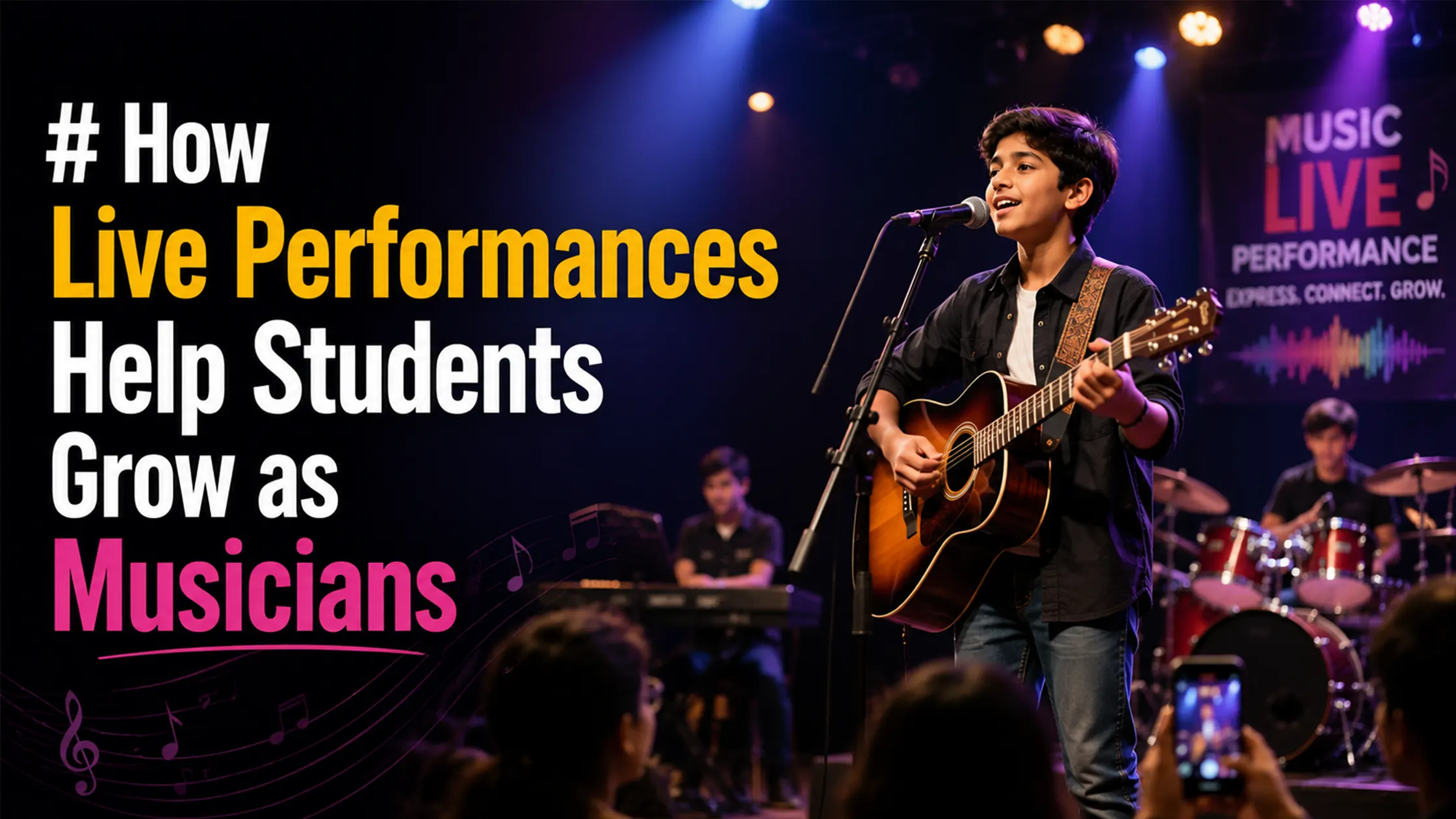
Learning music is a journey. It starts with the basics—learning a note, a rhythm, a song, or how to hold an instrument. Then comes practice, more practice, and eventually the exciting moment when a student gets to perform in front of someone else.
For many children, that first performance can feel like a big deal.
They might feel nervous, forget a note, sing a little too quietly, or wonder whether everyone is watching them. And that’s completely normal.
But with every performance, something changes. They become a little more comfortable, a little more confident, and a little better at handling those nervous moments.
That’s why live performances for music students can be such a valuable part of learning music.
It’s Different When Someone Is Watching
Practising alone at home is one thing. Performing in front of an audience is completely different.
When you’re practising, you can stop whenever you want and start again.
On stage, you have to keep going.
That experience teaches students something that a regular practice session can’t quite replicate. They learn to stay focused, listen carefully, remember what they’ve practised, and continue even when things don’t go perfectly.
And honestly, things don’t always go perfectly.
That’s part of the learning.
1. Performing Helps Children Become More Confident
Getting on stage takes courage, especially for a child.
The first time might be scary. But once they’ve finished and realise they managed to do it, they often feel a real sense of achievement.
The next performance usually feels a little easier.
Over time, students start becoming more comfortable standing in front of other people and expressing themselves.
That confidence isn’t limited to music either. It can help children feel more comfortable participating in school activities, speaking in front of others, or trying something new.
2. It Helps With Stage Fear
Almost everyone gets nervous before performing—even experienced musicians.
Children need to learn that feeling nervous doesn’t mean they aren’t ready.
With regular, supportive performance experiences, they can learn simple ways to handle those nerves:
- Take a breath
- Focus on the music
- Listen carefully
- Stay in the moment
- Don’t panic after a mistake
- Keep going
Eventually, standing on stage becomes less unfamiliar.
The aim isn’t to make a child never feel nervous. It’s to help them realise that they can perform even when they’re nervous.
3. Practice Suddenly Has a Purpose
Let’s be honest—getting a child to practise the same song again and again isn’t always easy.
But tell them they have a performance coming up, and practice can suddenly feel different.
There’s now a reason behind it.
They may start paying more attention to the things they previously rushed through:
- “Was my timing right?”
- “Did I play that note correctly?”
- “Am I singing clearly?”
- “Do I remember the ending?”
- “Can I play this without stopping?”
Having a goal can make practice feel more meaningful.
4. Children Learn That Mistakes Are Okay
This might actually be one of the most valuable things students learn from performing.
A student can practise a song perfectly at home and still make a mistake on stage.
Maybe they forget a note.
Maybe they lose their place.
Maybe they start too early.
It happens.
The important lesson is learning not to stop because of one mistake.
They learn to recover, keep going, and finish what they started.
That’s a lesson that can stay with them long after the performance is over.
5. They Become Better Listeners
Good musicians don’t just play or sing. They listen.
This becomes particularly obvious during group performances.
Students have to listen to the music around them and pay attention to timing, rhythm, changes, and cues.
They also learn to listen to other performers and adjust when necessary.
The more they perform, the more naturally these things can become part of their musical awareness.
6. Students Learn How to Connect With an Audience
Playing a song correctly is important, but performing is about more than getting every note right.
Students gradually learn how to present themselves in front of an audience.
They may learn to:
- Stand confidently
- Look towards the audience
- Introduce their performance
- Express the mood of the song
- Stay focused
- Finish confidently
These little details can turn simply playing a song into actually performing it.
7. Performing Shows Children How Much They’ve Improved
Sometimes children don’t realise how much they’ve learned.
They might practise every week without noticing that something which was difficult a few months ago is now easy.
A performance can make that progress feel real.
They might think:
“I couldn’t play this before, but now I just performed it on stage.”
That feeling can be incredibly motivating.
It gives them something to be proud of and encourages them to keep learning.
8. It Gives Them Something to Work Towards
Having a performance on the calendar can give students a simple goal.
Maybe they want to learn one particular song before the event.
Maybe they want to perform without stopping.
Maybe they want to feel less nervous than they did last time.
These small goals can encourage students to practise regularly and take ownership of their progress.
As they grow, those goals can become more personal and challenging.
9. Group Performances Teach Teamwork
Music doesn’t always have to be a solo activity.
When children perform together, they learn that everyone has a role.
If one person changes the timing or misses a cue, it can affect the whole group.
Students therefore learn to:
- Listen to one another
- Wait for their turn
- Follow the rhythm
- Stay together
- Support their classmates
- Work towards the same goal
It can also be a lot of fun.
For many children, performing with friends becomes one of their favourite parts of learning music.
10. It Teaches Responsibility
There is a surprising amount of responsibility involved in preparing for a performance.
Students have to remember what they’ve practised, arrive prepared, listen to their teacher, and know when it’s their turn.
For older students, they may also need to take greater responsibility for their own practice.
These habits can gradually teach children that improvement comes from showing up and putting in the effort.
11. Teachers Get to See the Student in a Different Setting
A classroom and a stage are two very different environments.
A student who seems confident during a lesson might suddenly become nervous when there is an audience.
Another student who is usually quiet might surprise everyone with their confidence on stage.
Performances give teachers an opportunity to notice these things.
They can then help students work on whatever they need—whether that’s confidence, timing, stage presence, preparation, or simply feeling more comfortable in front of people.
Your Child Doesn’t Have to Be a “Natural Performer”
This is something parents sometimes worry about.
What if my child is shy?
What if they get nervous?
What if they make mistakes?
That’s okay.
The purpose of student performances isn’t to find out who is the best performer.
It’s about giving children experience.
A shy child may need a little more time. A confident child may be ready for a bigger challenge. Both can benefit from performing when the experience is introduced in a supportive way.
How Parents Can Help Before a Performance
Parents don’t need to become strict music coaches at home.
A little encouragement can go a long way.
Don’t Focus on Perfection
Instead of asking whether every note was perfect, ask your child how they felt about the performance.
Encourage Practice
Help them find a comfortable time to practise, but try not to turn every practice session into an argument.
Remind Them That Mistakes Are Normal
If they make a mistake, remind them that they can simply continue.
Celebrate the Courage
Getting on stage in front of an audience is an achievement in itself.
Sometimes saying “I’m proud of you for getting up there” means much more to a child than pointing out what went wrong.
How Music Teachers Can Make Performances Less Scary
The first performance can set the tone for how a child feels about being on stage.
Teachers can make the experience easier by starting small and gradually building up.
This could mean:
- Practising performances during class
- Starting with group performances
- Choosing songs students are comfortable with
- Giving children enough time to prepare
- Explaining what will happen on the day
- Encouraging students rather than putting pressure on them
- Giving useful feedback afterwards
When children feel supported, performing can become something they look forward to instead of something they fear.
Does Every Child Need to Perform?
Not necessarily on a large stage.
Some children love performing in front of an audience. Others prefer smaller groups.
That’s perfectly fine.
Performance opportunities should match the child’s age, personality, confidence, and level of preparation.
Even a small classroom performance can be a meaningful experience for a beginner.
Finding the Right Music School in Bangalore
If you’re looking for music classes for kids in Bangalore, it’s worth looking beyond just the lessons themselves.
Ask about the overall learning environment.
Does the school encourage children to perform? Do teachers give them opportunities to practise what they’ve learned? Are performances treated as a learning experience rather than a competition?
A supportive environment can make a big difference to how children feel about music.
The Art Elite in Bangalore
The Art Elite provides music education at multiple locations across Bangalore, making it easier for families to find a convenient branch.
Whitefield
The Art Elite’s Whitefield branch is located at Nexus Whitefield Mall, making it a convenient choice for families looking for music classes in Whitefield.
Krishnarajapuram
The Art Elite also has a branch at Nexus Shantiniketan, Krishnarajapuram, serving families in and around K.R. Puram.
Mahadevapura
Families living in Mahadevapura and nearby areas can also explore music learning opportunities at The Art Elite.
Having multiple branches gives parents the flexibility to choose a location that works well with their child’s school and weekly schedule.
What Should You Look for in a Music School?
When choosing a music school in Bangalore, think about your child’s overall experience rather than just the course.
Look for:
Patient teachers: Children should feel comfortable making mistakes and asking questions.
A positive environment: Learning music should feel exciting, not stressful.
Regular practice: Students should be encouraged to develop good practice habits.
Performance opportunities: When students are ready, performing can help them put their learning into practice.
Individual attention: Every child progresses differently, so teachers should understand their individual needs.
Frequently Asked Questions
How do live performances help music students?
Performances give students the opportunity to use their musical skills in a real setting. They can help children develop confidence, focus, listening skills, stage experience, and the ability to handle mistakes.
Can performing help a child overcome stage fear?
Yes. Gradual and positive performance experiences can help children become more comfortable on stage and learn how to manage nervousness.
What if my child makes a mistake during a performance?
That’s completely normal. One of the most useful lessons students learn from performing is how to recover from a mistake and keep going.
Should beginners perform on stage?
They can, as long as the performance is appropriate for their age and level of preparation. Small group or classroom performances can be a great starting point.
How can parents support a child before a performance?
Encourage practice, keep expectations realistic, and remind your child that making mistakes is okay. Most importantly, focus on their effort rather than perfection.
Where can I find music classes for kids in Bangalore?
The Art Elite has branches in Whitefield, Krishnarajapuram, and Mahadevapura, providing convenient options for families looking for children’s music education in Bangalore.
The Stage Is Part of the Learning
A child’s first performance may not be perfect.
They may feel nervous. They may make a mistake. They may forget something they’ve practised at home.
And that’s okay.
Because the real value of performing isn’t about delivering a flawless performance.
It’s about standing up, trying something challenging, learning from the experience, and walking off the stage feeling a little more confident than before.
With the right guidance and encouragement, those small moments can become important milestones in a child’s musical journey.
At The Art Elite, we believe music is about more than learning notes and songs. It’s about helping students discover their confidence, creativity, discipline, and enjoyment of music.
If you’re looking for music classes for kids in Bangalore, explore The Art Elite’s branches in Whitefield, Krishnarajapuram, and Mahadevapura and give your child the opportunity to learn, practise, and eventually share their music with the world.
Sometimes, the most important thing a young musician learns on stage isn’t how to perform—it’s how to believe in themselves.
 by
by