
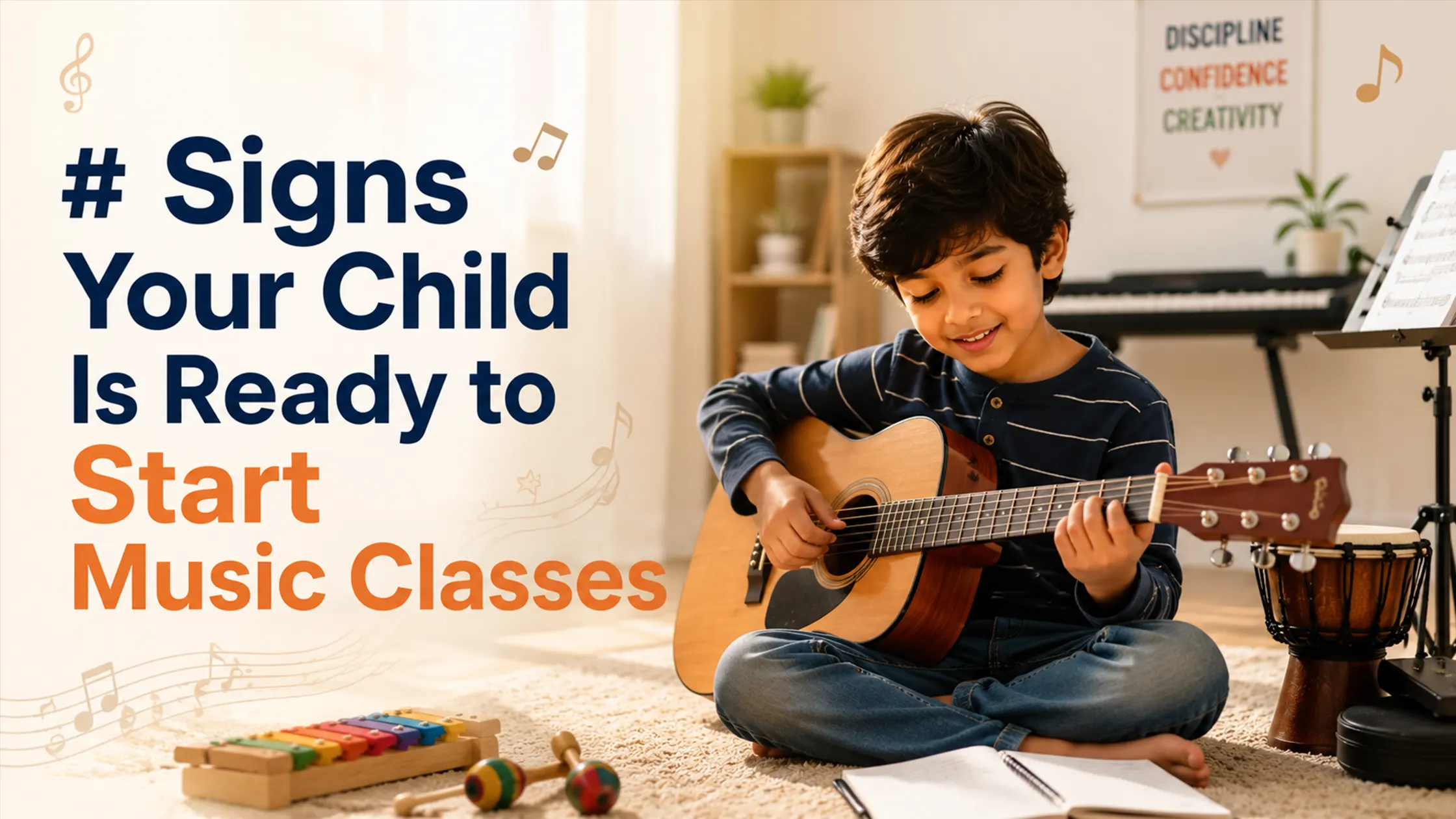
Does your child start singing whenever their favourite song comes on? Do they tap on tables, make up little tunes, or get excited whenever they see someone playing an instrument?
If yes, you may have already wondered whether it’s time to enrol them in music classes for kids.
The good news is that there isn’t a fixed age when every child has to start learning music. Some children show an interest when they’re very young, while others discover their love for music a little later.
Instead of worrying too much about age, it’s better to look at your child’s behaviour and interests. If they enjoy music and are ready to learn something new, they may be ready to take their first music class.
If you’re looking for music classes for kids in Bangalore, here are some simple signs to look out for.
1. Your Child Naturally Loves Music
This is probably the biggest sign.
If your child gets excited when music starts playing, sings along to songs, or spends time dancing and moving to different beats, they already have a natural connection with music.
You may notice them:
- Singing their favourite songs repeatedly
- Humming while playing
- Making up their own songs
- Clapping along to music
- Trying to copy singers
- Dancing whenever they hear music
- Asking questions about instruments
You don’t need to turn this interest into something serious immediately. But it can be a great opportunity to introduce them to structured music learning.
2. They Enjoy Singing or Making Their Own Sounds
Children are naturally curious about sounds.
Maybe your child sings the same line of a song again and again. Maybe they change the lyrics and create their own version. Or perhaps they simply enjoy making different sounds with their voice.
These little things can be signs that they’re interested in exploring music.
A music class can give them a chance to turn that natural curiosity into a skill while still keeping the experience fun.
3. They Are Curious About Musical Instruments
Have you ever caught your child staring at a piano, keyboard, guitar, or drum and asking, “Can I play that?”
That curiosity is worth encouraging.
You don’t have to decide immediately which instrument they should learn. Let them explore different sounds and instruments first.
Sometimes a child’s favourite instrument becomes obvious once they get the chance to try it.
4. They Can Follow Simple Instructions
Music classes aren’t all about sitting quietly and listening to a teacher.
Children may be asked to clap a rhythm, repeat a sound, sing a line, play a note, or wait for their turn.
Your child doesn’t need to have perfect concentration. That’s not realistic, especially for younger children.
What matters is whether they can generally listen and follow simple instructions for a short period.
5. They Can Focus on Something They Enjoy
Children naturally have shorter attention spans than adults.
So don’t expect a young child to sit through a long lesson without moving or getting distracted.
Instead, think about how they behave when they’re doing something they genuinely enjoy.
Can they:
- Complete a puzzle?
- Listen to a story?
- Build something?
- Draw for a while?
- Play a game with you?
If they can focus on activities they enjoy, they’re likely capable of engaging with a beginner-friendly music class.
6. They Don’t Mind Repeating Things
Learning music takes practice.
A child may need to sing the same song several times or practise the same notes before they feel comfortable.
If your child enjoys repeating their favourite songs or practising something until they get it right, that’s a good sign.
And if they don’t get it right the first time, that’s completely normal.
Music should teach children that making mistakes is simply part of learning.
7. They Are Excited About Joining a Class
Sometimes, the best way to find out if your child is ready is simply to ask them.
Try saying:
“Would you like to learn music?”
If they get excited, start asking questions, or immediately want to know what instrument they can play, that’s a pretty good indication that they’re interested.
Giving children some choice can also make the experience more enjoyable.
Instead of deciding everything for them, you could ask whether they’d like to explore singing, keyboard, guitar, or another musical activity.
8. They Are Comfortable Learning With a Teacher
Starting a new class can be exciting, but it can also feel a little intimidating for some children.
If your child is comfortable interacting with teachers or participating in activities outside home, they may adjust quickly.
If they’re shy, don’t worry.
A shy child can absolutely learn music. They may simply need a little more time to become comfortable with the teacher and the class environment.
A patient teacher can make that transition much easier.
9. They’re Beginning to Enjoy Practice
Your child doesn’t need to practise for hours to start learning music.
In fact, long practice sessions can make music feel like a chore for a beginner.
What’s more useful is developing a simple habit.
Even a short practice session can help a child become familiar with what they learned in class.
As they become more interested and confident, their practice time can naturally increase.
10. They Understand That They Won’t Get Everything Right Immediately
This is an important one.
Music can sometimes be challenging. A child may struggle with a particular note, rhythm, song, or instrument.
If they can handle small mistakes and are willing to try again, they’re developing exactly the kind of attitude that can help them learn.
And if they get frustrated sometimes, that’s normal too.
Parents don’t need to expect perfection. Encouragement and patience are much more helpful.
What Is the Right Age to Start Music Classes?
This is one of the first questions most parents ask.
The truth is, there isn’t one perfect age for music classes.
Young children can be introduced to music through playful activities, singing, rhythm, and movement. As children grow, they may become ready for more structured lessons and instrument training.
Instead of asking only, “Is my child old enough?”, ask:
“Is my child interested and ready to participate?”
That can tell you much more.
Should Your Child Start With Singing or an Instrument?
There is no universal right answer.
It depends on what your child enjoys.
If They Love Singing
Vocal classes can be a natural starting point. Children can explore songs, rhythm, pitch, and musical expression.
If They Love Instruments
If your child is always drawn towards a keyboard, guitar, drums, or another instrument, beginner lessons can help them explore that interest.
If They’re Not Sure
That’s perfectly fine.
A trial or introductory class can help your child experience music learning before you decide on a particular direction.
What Can Children Learn From Music Classes?
Music classes aren’t only about learning how to sing a song or play an instrument.
Over time, children can develop a range of skills through regular musical activities.
Creativity
Music gives children an opportunity to experiment and express their ideas.
They can create sounds, explore melodies, and eventually develop their own musical style.
Listening
Music requires children to listen carefully—to their teacher, other students, rhythms, notes, and melodies.
Coordination
Playing an instrument can involve coordinating hands, fingers, movement, and listening at the same time.
Confidence
Learning something new and eventually performing it can give children a real sense of achievement.
Even something as simple as playing a song for their parents can be a big confidence boost.
Patience
Children learn that improvement doesn’t happen instantly.
They have to practise, make mistakes, try again, and gradually get better.
Self-Expression
Music gives children another way to express themselves and communicate emotions.
How Parents Can Make Music Learning More Enjoyable
Starting music classes is only one part of the journey. What happens at home matters too.
Don’t Put Too Much Pressure on Them
It’s okay if your child doesn’t become perfect at an instrument quickly.
The goal at the beginning should be to help them enjoy learning.
Celebrate Small Wins
Maybe they learned a new song. Maybe they remembered a rhythm. Maybe they finally played a difficult note correctly.
Celebrate those moments.
Small achievements can keep children motivated.
Make Practice a Routine
Instead of saying, “You have to practise now,” try creating a simple routine that fits naturally into your child’s day.
Let Them Listen to Music
Play different types of music at home. Let them discover what they like.
You never know what might spark their interest.
Don’t Compare Them With Other Children
Every child learns differently.
One child may pick up an instrument quickly, while another may take longer. That’s completely normal.
What If Your Child Is Shy?
Don’t let shyness stop you from considering music classes.
Many children take a little time to feel comfortable in a new environment.
A supportive teacher can help them gradually participate without making them feel pressured.
In fact, becoming comfortable performing or sharing music can sometimes help a shy child build confidence over time.
What If My Child Loses Interest?
This happens more often than parents realise.
A child may be excited about music initially and then lose interest after a few weeks.
Before giving up completely, try to understand why.
Maybe the class is too difficult. Maybe they don’t connect with the instrument. Maybe they’re simply tired or interested in something else at the moment.
Talk to them.
The aim is to develop a positive relationship with music rather than making it another source of pressure.
How to Choose the Right Music School for Your Child
Once you decide to start, finding the right music school in Bangalore is the next step.
Don’t look only at the distance from your home.
Consider:
Teaching Style
Children learn differently from adults. Look for teachers who understand how to make lessons engaging and age-appropriate.
Teacher-Student Interaction
A friendly and patient teacher can make a huge difference, especially for beginners.
Class Environment
Your child should feel comfortable asking questions, making mistakes, and trying again.
Convenience
A conveniently located music school makes regular attendance much easier for both parents and children.
Trial Classes
If available, a trial class can be a great way to see whether your child enjoys the environment before committing.
Music Classes for Kids in Bangalore
For parents looking for music classes in Bangalore, choosing a convenient location can make it easier to maintain a regular learning routine.
The Art Elite has multiple branches across Bangalore, allowing children and parents to choose a location that works best for them.
The Art Elite – Whitefield
The Whitefield branch is located at Nexus Whitefield Mall and is a convenient option for families looking for music classes in Whitefield.
The Art Elite – Krishnarajapuram
The Art Elite also has a branch at Nexus Shantiniketan, Krishnarajapuram, making it accessible for families in and around the K.R. Puram area.
The Art Elite – Mahadevapura
Families in Mahadevapura and nearby areas can also explore music learning at The Art Elite’s Mahadevapura branch.
Having multiple locations across Bangalore gives parents more flexibility when choosing a music school that’s convenient for their child’s routine.
Frequently Asked Questions
What is the best age to start music classes for children?
There isn’t one ideal age for every child. Readiness depends more on the child’s interest, attention span, ability to follow simple instructions, and the type of class.
How do I know if my child is ready for music classes?
If your child enjoys singing, dancing, rhythms, musical instruments, or listening to songs and can participate in a structured activity for a short period, they may be ready to start.
Should my child learn singing or an instrument?
Both are good options. Start with whatever your child naturally enjoys. If they’re unsure, an introductory class can help them decide.
Does my child need to know music before joining a class?
No. Beginner music classes are designed for children who are just starting out. Your child doesn’t need previous musical training.
What if my child is shy?
That’s completely okay. A friendly and supportive teacher can help shy children gradually become comfortable in the class.
How often should children practise?
It depends on their age and level. For beginners, short and regular practice sessions are often easier to manage than long sessions.
Where can I find music classes for kids in Bangalore?
The Art Elite has branches in Whitefield, Krishnarajapuram, and Mahadevapura, making it convenient for families in different parts of Bangalore to explore music education.
Let Your Child Discover the Joy of Music
Your child doesn’t need to be a natural performer to start learning music.
They don’t need to already know how to play an instrument. They don’t even need to be able to sing perfectly.
Sometimes, all they need is a little curiosity and the opportunity to try.
If your child loves music, enjoys singing, taps along to rhythms, or keeps asking about musical instruments, this could be a wonderful time to introduce them to music classes for kids in Bangalore.
At The Art Elite, children can explore music in a supportive learning environment while developing their skills, creativity, confidence, and love for music.
With branches in Whitefield, Krishnarajapuram, and Mahadevapura, you can choose a location that works conveniently for your family.
Start with curiosity. Learn through practice. And most importantly, let your child enjoy the music.
 by
by